The Critical Flaw in Healthcare AI and How to Fix It
Healthcare leaders no longer ponder whether to adopt artificial intelligence (AI) – only when. The mandate is clear: get with the biggest trend since the Internet or die.
Smart AI deployment promises to reduce costs, boost efficiency, and improve patient and provider experiences. Yet, as organizations move from theory to real-world outcomes, they rapidly discover AI is only as reliable as the data that powers it. In healthcare, that data is notoriously complex – unlike the pristine data vendors use to demo their AI tools.
The Healthcare Data Dilemma
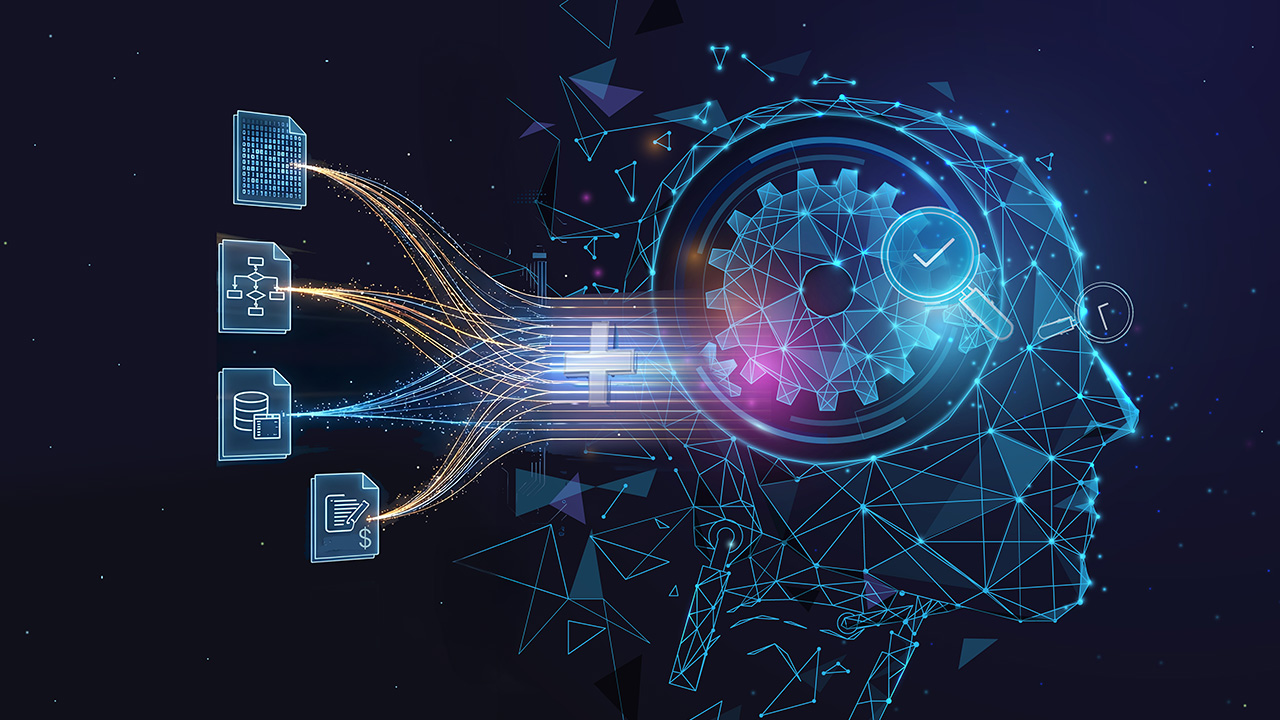
The problem isn’t just the sheer volume of data, but the ever-increasing complexity and number of sources. Health systems are inundated daily with information from EHRs, payers, government entities, and health plans – each with their own data formats, standards, and level of completeness.
Legacy data architectures were designed for record-keeping, not AI applications. They struggle to meet the stringent quality standards of AI tools, which depend on accurate, consistent, complete, contextually relevant ‘source of truth’ information. If you feed a stream of flawed data into sophisticated algorithms, the “garbage-in, garbage-out” rule applies. You’re likely to get:
- Hallucinations: AI models can generate inaccurate insights that undermine good decision-making.
- Compliance Risks: Errors impact timeliness and accuracy.
- Operational Debt: Inefficiencies AI was meant to eliminate are instead compounded – at machine speed.
- Diminished Trust: Errors and unreliable results cause friction and harm your reputation.
No matter how sophisticated AI becomes, it will not perform as advertised on an unstable foundation. Data readiness isn’t just a prerequisite for successful AI deployment; it’s the entire ballgame.
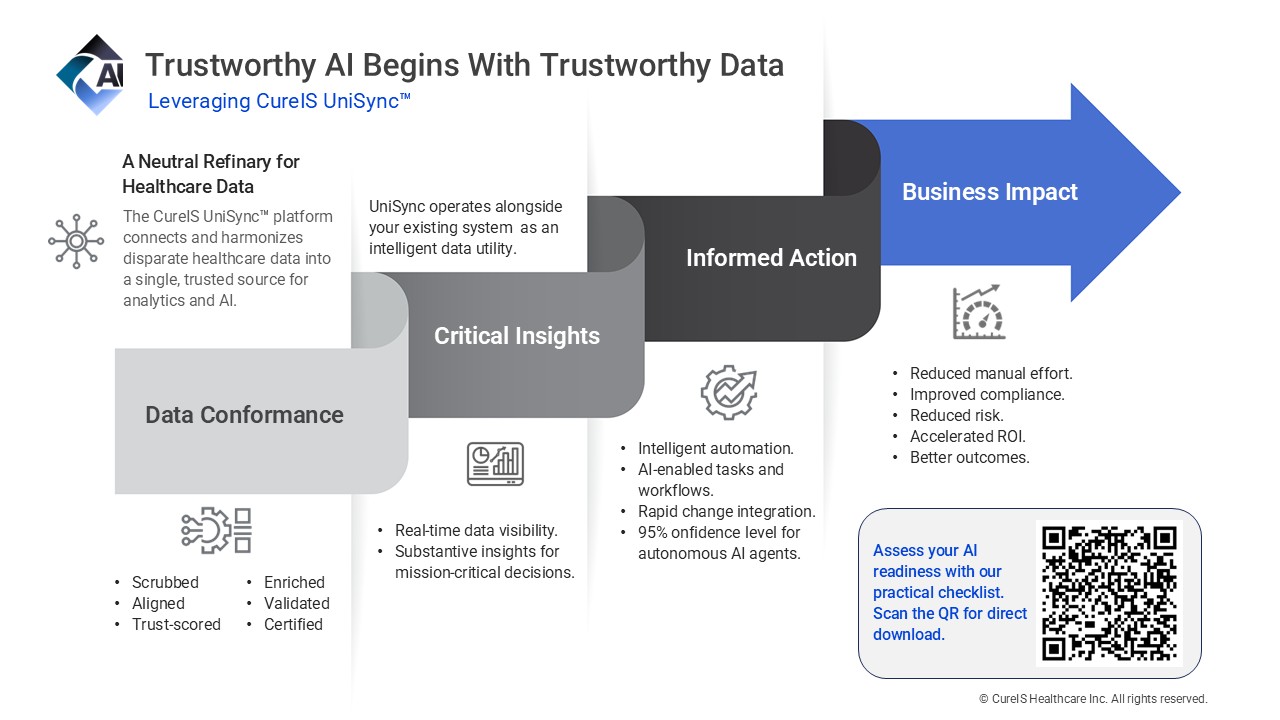
CureIS tackles this challenge head-on through our UniSync™ platform and Agentic AI Initiative.
The Rise of Agentic AI: A Powerful Tool with a Critical Dependency
In January 2025, Forbes declared the arrival of the “age of agentic AI,” predicting a “multitrillion-dollar” AI economy. This sparked a gold rush among consultants and vendors, and FOMO (fear of missing out) that tempts business leaders to layer generic AI agents over their existing, fragmented data environments.
“Generic AI tools trained on messy, unverified public data will not survive the brutal complexities of the healthcare ecosystem,” observes Chris Sawotin, CureIS CEO. “True, measurable value comes from tactical AI operating on a pristine, curated dataset. We built our UniSync™ Health Data Management Platform+ to provide that trusted foundation, enabling reliable results for AI agents and tools from day one.”
Hype aside, agentic technology is still in its early stages. The term “agent” is often loosely applied to describe large language models (LLMs) with rudimentary planning and tool-calling capabilities, enabling them to break complex tasks into smaller steps the LLM can perform without multiple prompts.
Tactical AI in Action
The CureIS Agentic AI Initiative demonstrates the power of a data-first model. Instead of relying on generic knowledge, dedicated CureIS agents – or any other AI agents our clients deploy- operate exclusively on clean, conformed healthcare data curated by UniSync. This allows them to autonomously resolve complex, time-consuming issues that impede efficient healthcare administration. Agents tackle challenges such as:
Enrollment Error Resolution: Processing enrollment files often uncovers discrepancies that require manual verification. CureIS AI agents are equipped with health plan portal logins to investigate errors directly, determining the truth without human intervention. For example, term-by-absence errors can mean an enrollment file is truncated, with thousands of missing records. Instead of assuming the term-by-absence is correct, a CureIS AI Analyst verifies each record, identifying the erroneous files and preventing thousands of incorrect entries.
Medicaid Redetermination: With continuous unwinding, the compliance burden of eligibility verification is immense. CureIS AI agents can process unlimited volumes of eligibility data in real time, automatically flagging and resolving discrepancies to ensure compliance and prevent revenue loss.
The Human-AI Partnership: Augmentation, Not Replacement
Trustworthy AI isn’t an algorithm you buy; it’s a data-first culture you build.
As the healthcare industry pivots toward AI-enablement, the winners will not be the organizations that adopt AI the fastest, but those that commit to building a foundation of clean, reliable, actionable data.
To learn more about how a tactical, data-first AI strategy can help your organization outperform, connect with a CureIS AI readiness expert or get started by conducting your own assessment using our practical checklist (see the QR code on the image above this post.)
Connect With a CureIS AI Readiness Expert.
Learn more about how a tactical, data-first AI strategy can de-risk your AI investment and compress time-to-value.
Upcoming Webinar