The $57 Claim Denial Treadmill | Why Health Plans Are Spending More to Lose More.
In Brief: The average cost to rework a denied claim just hit $57.23 – up 30% in a single year. Yet one in four denials traces back to upstream data errors that existed long before the claim was submitted: stale eligibility, unreconciled enrollment, fragmented source systems. The industry keeps buying denial management tools instead of fixing root causes. Mid-market health plans that invest in upstream data integrity and trust-scored, conformed data layers achieve measurable reductions in denial volume and costly rework.
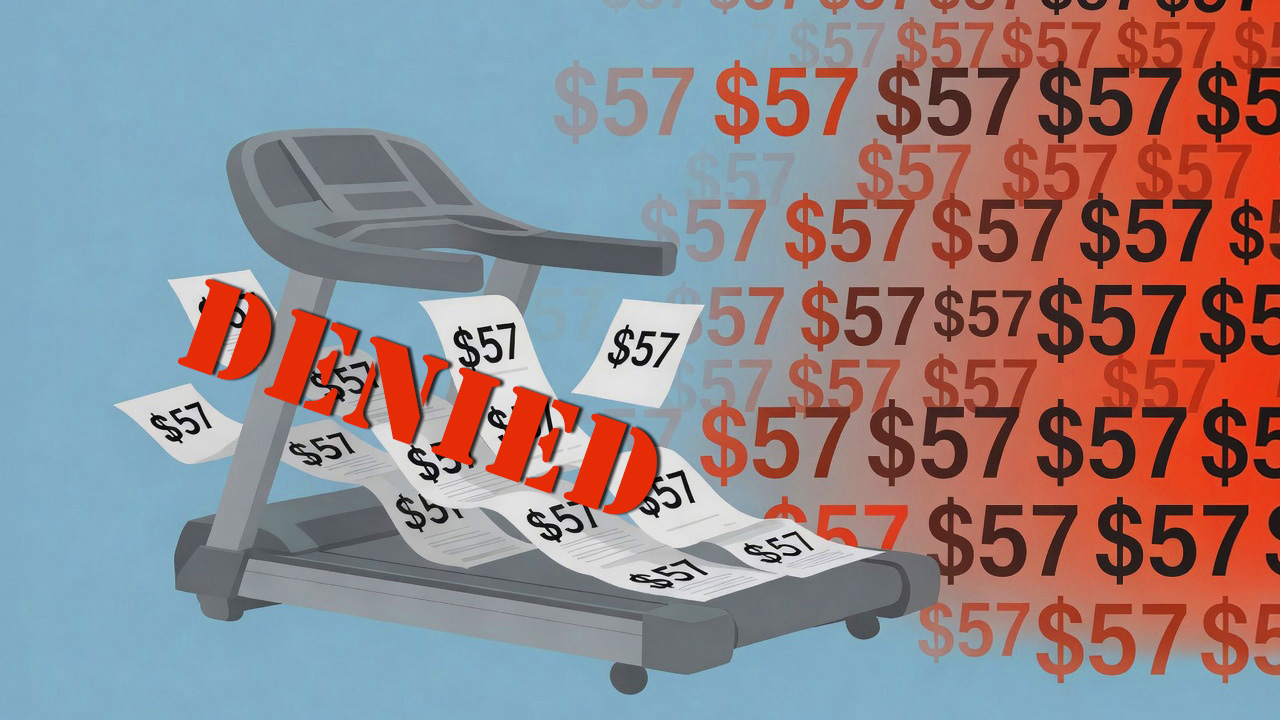
Here’s a number worth sitting with: $57.23. That’s what it costs, on average, to rework a single denied claim. Last year it was $43.84. That’s a 30% jump in twelve months, and there’s no sign it’s plateauing. Meanwhile, coding-related denials have more than doubled in three years. Medicare Advantage denial amounts keep climbing, and inpatient denial volumes have surged more than threefold in the same window. If those trends don’t make your finance team flinch, check their pulse.
For small-to-mid-market health plans – the ‘forgotten’ 50K to 500K lives segment – $57 per denied claim may not sound existential. Multiply it across hundreds of thousands of annual submissions, and it becomes a budget line no finance leader can dismiss. Physician Health Plan Michigan closed permanently in 2025 after losses became untenable. Providence Health & Services just announced it’s exiting most of its plans in 2027. They won’t be the last. Administrative friction means between 35% and 60% of denied claims are never resubmitted, which means writing off revenue you already earned. And the industry’s dominant response? Spend more on managing the problem downstream.
That’s not a strategy. It’s a coping mechanism.
The Denial Management Treadmill
The pattern is so predictable it should have its own diagnostic code. Denial rates spike. Leadership greenlights a denial management initiative. The team builds dashboards, hires analysts, deploys an AI tool that scores claims for denial risk before submission. The tool catches some problems. Rates dip. Leadership declares victory, maybe writes a LinkedIn post about it.
Six months later, the rates are higher than before. Why? Because the AI tool is scoring claims built on data that was already compromised. Eligibility records already 72 hours stale by the time they’re checked. Enrollment files reconciled with yesterday’s logic against last week’s data. Coding that reflects what three different source systems couldn’t agree on. By the time a claim reaches adjudication, it’s hauling invisible baggage no amount of back-end intelligence can unpack. You haven’t prevented denials; you’ve simply processed errors faster.
Roughly 75% of healthcare leaders named automation their top 2026 priority, flagging AI-driven denial scoring, predictive analytics, and appeals automation. But HFMA recently warned against automating broken processes. Which is a polite way of saying: you can’t AI your way out of a data quality problem.
When the foundation is fractured, every tool you layer on top inherits those fractures. You can run faster. The destination never gets closer.
Upstream Reality: Denials Are a Data Problem. Treat Them Like One.
More than 25% of denials trace directly to inaccurate or incomplete data introduced long before anyone hits “submit.” And this isn’t a provider documentation issue alone. For payers, it’s about upstream data conformance failures – stale eligibility feeds, unreconciled enrollment from multiple sources, conflicting coverage details that never get resolved at the business-rule level.
The problem is structural. Health plans ingest data from employer files, carrier feeds, state eligibility systems, and internal platforms – each with its own update cadence, format, and personal definition of “current.” Without continuous reconciliation at the business-rule level, conflicts accumulate. By adjudication, claim denial is, essentially, locked in.
While the industry talks about denial prevention, it mostly practices denial reaction. Actual prevention means ensuring the data is conformed, reconciled, and trustworthy before it enters the claims pipeline. It means treating data integrity as a financial function, not an IT afterthought.
The Mid-Market Math
A regional plan processing 500,000 claims a year at a 15% denial rate burns roughly $4.3 million annually in rework alone. And that’s before you count the revenue that walks out the door in abandoned claims.
The temptation is to follow the enterprise playbook: bolt on a denial management platform, expand analytics, deploy another AI tool. But for a plan running on thin margins, that playbook adds cost to manage a symptom while the disease – upstream data fragmentation – keeps spreading. National payers absorb and spread those costs across massive scale and dedicated teams. Mid-market plans can’t. They’re running aging core systems that were never built for real-time reconciliation, under the same regulatory pressure (hello, CMS-0057 FHIR mandates), with fewer resources.
Copying the enterprise strategy at mid-market scale is like self-medicating with someone else’s prescription. The diagnosis might overlap, but the dosage will hurt you.
Prevention Over Perpetual Rework
Breaking the cycle means investing upstream in the data layer itself, before claims ever form.
The most practical option is to deploy a neutral data conformance utility that ingests from every source, reconciles conflicts using payer-specific business rules, proactively scrubs for downstream conflicts before they generate denials, handles retroactive changes through robust versioning, validates against compliance references in real time, and continuously trust-scores data for reliability. CureIS’s UniSync™ does exactly this. When a claim reaches adjudication, eligibility is current, enrollment is reconciled, and coding reflects a single source of truth.
The result is structural. Denial volume is reduced; you’re not just managing the same mess faster.
UniSync is an intelligent data utility that operates alongside any existing system – turning fragmented healthcare data into clean, trust-scored, actionable information that powers automation and AI across payer and provider workflows. No rip-and-replace of core admin systems. Measurable impact often shows up in weeks. For that $4.3 million denial spend, even a conservative 20% reduction recovers nearly $900,000 in administrative costs, plus meaningful revenue protection from claims that would have otherwise been abandoned.
The Finance Leader’s New Reality
HFMA called 2026 a “revenue cliff” year, and they weren’t being dramatic. CFOs and VPs of Finance face mounting pressure for accurate cash flow forecasting, denial trend analysis, and reimbursement insights that actually inform strategy. The old model – track, appeal, report, repeat – doesn’t get there.
Prevention lives upstream. You can’t fix what you can’t see clearly, and appeals teams operate too far downstream to influence data quality at the source. The organizations pulling ahead are the ones treating data integrity as a core financial function. Their data foundation provides conformed, trust-scored records ready for adjudication, AI initiatives, and regulatory demands before the problems start.
The Bottom Line
Denial costs aren’t static. $57 per claim today. Potentially $70 to $100 tomorrow, as rework teams and tools scale to chase climbing volumes. Denial management tools have value. How much value depends entirely on the quality of the data they’re working with.
Denial prevention lives upstream: eligibility reconciled in real time, retroactive changes versioned and propagated, every record carrying a dynamic trust signal that tells automated systems whether to process confidently or flag for review.
Fix the data. Bend the curve. In weeks, not years.
————
Ready to step off the denial treadmill? Schedule a targeted assessment and see how upstream data conformance can reduce your denial volume in weeks, without disrupting core operations.
Learn more about our two decades of expertise in healthcare data management.
Frequently Asked Questions
Does upstream data conformance require replacing our core administrative system? No. Modern data conformance platforms run alongside legacy cores — Facets, QNXT, HealthRules, whatever you’ve got – ingesting and reconciling data from all sources without migration or rip-and-replace.
How quickly can upstream data fixes impact denial rates? Measurably, within weeks. The highest-volume denial causes – stale eligibility, unreconciled enrollment, source-system conflicts – are addressed at the data layer before claims enter adjudication. You’re not waiting for a multi-year implementation to see results.
What’s the ROI case for data conformance vs. denial management tools? At $57 per reworked denial and a 15% denial rate, a plan processing 500,000 claims annually spends roughly $4.3 million on denial administration. A 20% structural reduction recovers nearly $900,000 in admin costs alone, plus revenue recovery from claims that would otherwise be abandoned. The math isn’t subtle.
How does this connect to AI and automation initiatives? AI denial scoring and automation tools are only as good as the data underneath them. A conformed, trust-scored data foundation is the prerequisite – not the nice-to-have – for reliable AI in claims processing, prior auth, and predictive denial prevention. Without it, you’re automating broken processes.
Is this relevant for plans already investing in denial management? Even more so. If denial rates keep climbing despite investment in downstream tools, that’s a clear signal: root-cause data issues are outpacing your ability to manage symptoms. Upstream data conformance doesn’t replace denial management; it reduces the volume of denials that need managing in the first place.
Sources & References
Experian Health. “State of Claims 2025: The Denial Problem.” Experian Healthcare Blog, 2025.
Aptarro. “50+ US Healthcare Denial Rates & Reimbursement Statistics for 2026.” 2026.
Fierce Healthcare. “Payer Audits, Denial Amounts Rise Again in 2025.” 2025.
HFMA. “Predict, Prevent, Perform: The AI Evolution of Denials Management.” 2026.
HFMA. “Revenue Cycle as Enterprise Infrastructure: Building Financial Resilience in 2026.” 2026.
HFMA. “Interactive Guide: 2026 is a Revenue Cliff for Hospitals.” 2026.
Oncology Practice Management. “From Chaos to Clarity: Data-Driven Denial Prevention.” March 2026.
Latest Webinar